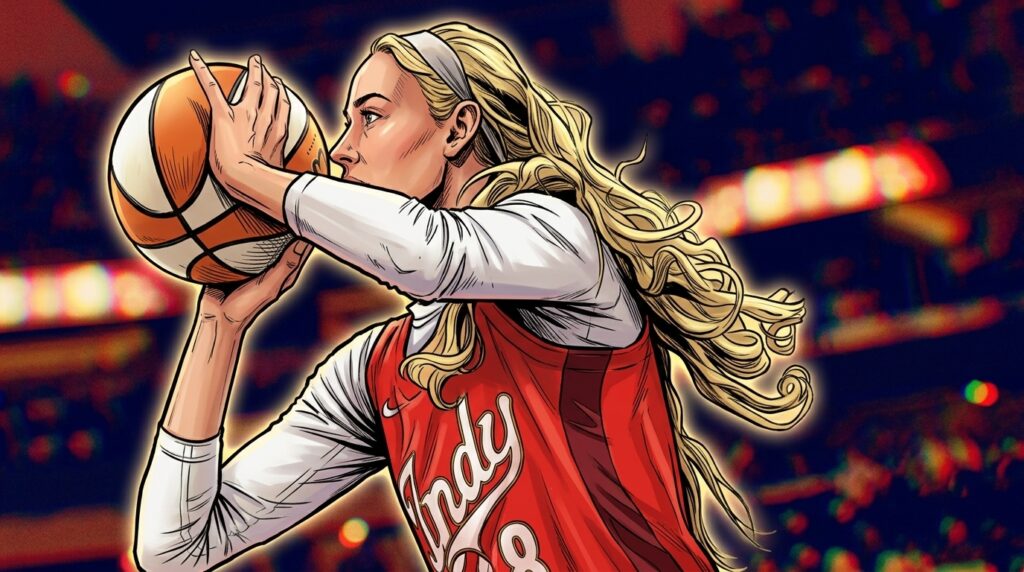
A minority owner of a professional sports team allegedly cornered two 16-year-old girls at a game and cussed them out over a sign. Conduct like that should end careers. Instead it produced a press release.
The girls were at Climate Pledge Arena on July 28 for Indiana Fever vs. Seattle Storm, holding a sign that read “Thank you Sophie for speaking up for girls!” Security had already approved it. One of them, Ahnaleigh Wilson, a Wenatchee-area high schooler, described what happened next to local reporters: Storm co-owner Celeste Keaton approached and started screaming.
“I’ve never been yelled at like that. That just caught me by surprise because I thought she was going to be nice, and she started screaming at us, and cussing at us,” Wilson said.
Keaton allegedly told the teenagers, “Jesus loves everyone. I hope Jesus can forgive you for what sin you’ve done. You’re f*cking insane.” She hasn’t confirmed or denied saying it. She also hasn’t said much of anything — no statement, no apology, nothing with her name attached to it.
Silence is the whole story.
Storm majority owner Ginny Gilder’s team statement said the organization is “aware one of our co-owners made comments to two fans” and that “everyone who attends a Storm game deserves to feel welcome.” Nice sentiment. Notice it never says who did what, and it never says Keaton’s name.
Wilson’s parents weren’t buying it either. “The apology is incredibly generic and not heartfelt at all. It should have come directly from Keaton. She needs to own up to it,” they said. A 16-year-old gets cussed at by a team owner and the organization’s move is to write a sentence that could apply to literally any complaint a fan has ever had.
The WNBA apparently agreed the statement wasn’t enough, because it did something Gilder’s press release couldn’t: it suspended Keaton from the Storm’s next five home games and fined her.
Suspending Keaton and fining her is the actual accountability here. Not the statement about “creating an inclusive environment,” which costs nothing and changes nothing. A ban from the building and a fine attached to Keaton’s own name — that’s a consequence a co-owner has to feel.
This isn’t a piece about the sign or what it was arguing. Sophie Cunningham hasn’t commented on the incident, and she shouldn’t be dragged into defending or disavowing an ownership figure she has no control over. Keep the underlying debate wherever you want it. It doesn’t change what happened courtside. A woman with an ownership stake in a professional franchise found two minors, decided their sign was worth cursing them out over, and reduced one of them to tears.
Ownership in professional sports comes with almost no day-to-day accountability. Majority owners get profiled, minority owners mostly don’t, and most fans couldn’t name the co-owners of their own favorite team. Keaton found out what happens when that anonymity runs into a courtside confrontation in a building full of phones: the story gets out anyway, and a generic apology written by someone else doesn’t cover for you.
Accountability gaps like this aren’t unique to Seattle. Leagues have gotten reasonably good at disciplining players and coaches for conduct issues — fines, suspensions, mandated apologies, the works. Ownership groups mostly police themselves, right up until the moment a confrontation happens where witnesses exist and the league has no choice but to act. The WNBA didn’t suspend Keaton because Gilder’s statement demanded it. The WNBA suspended Keaton because the alternative was pretending five home games’ worth of paying customers didn’t matter as much as one co-owner’s ego.
Five games and a fine isn’t nothing. It’s also the bare minimum for an adult who screamed at kids and then let somebody else clean it up.